What is Sex Positive Self Defense?
Empowerment-based practices to prevent, interrupt, and heal from violence and oppression.
Sex Positive Self Defense is about learning to say “No” to what you don’t want and “Yes” to what you do. It’s about reclaiming the capacity for creativity, self-expression, sexual agency, and pleasure. Sex education and violence prevention are not just about avoiding risks, whether it’s fear of pregnancy, fear of STIs, fear of sexual violence, but also the need for bonding and connection. Sex Positive Self Defense incorporates elements of martial arts, self-defense, and healing modalities such as yoga, meditation, ritual arts, and somatic therapies. A trauma-informed, community-based approach teaches skills for self-protection while fostering a culture of consent.
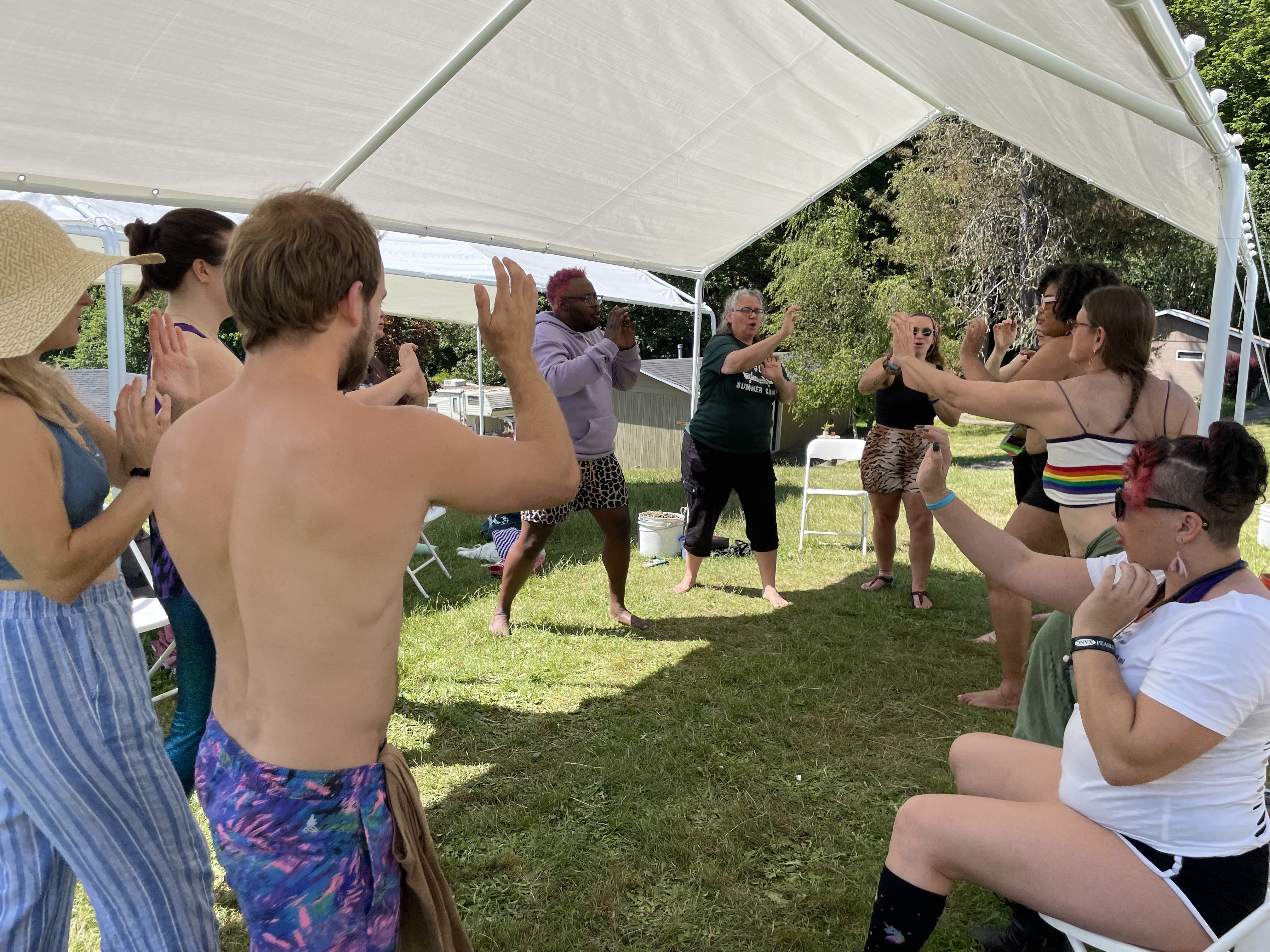
Sex Positive Self Defense is grounded in Empowerment Self Defense. It highlights sexual negotiation and consent. It centers the needs and experiences of survivors. Like ESD, it actively counters feelings of shame, self-blame, and isolation that many people feel after experiences of violence.
History and Evolution of Empowerment Self Defense
Empowerment Self Defense (ESD) grew out of the women’s empowerment movement of the 1970s and 1980s, along with shelters and women’s health initiatives to address needs for safety and care that were not being met. Grounded in theories about privilege and power (e.g., feminist theory, queer theory, critical race theory), it acknowledges root causes of violence through an intersectional lens. ESD contextualizes violence in real time.
Simple, effective verbal and physical strategies can be used when confronted with violence and can help us to manage the ongoing effects of oppression related to gender/identity and race/ethnicity, class, sexual orientation, age, and ability. Abuse may be verbal, psychological, physical, sexual, or financial. Abuse may include bullying, harassment, profiling, bias attacks, exploitation, and trafficking. ESD addresses a continuum of violence from low-level threats to more dangerous situations, with partners, acquaintances, strangers, and systems.
 Sex Positive Self Defense and Somatic Education